
Amazon PPC case study | Outdoor and home improvement
How an Amazon catalog grew sales 31% while lowering TACoS in 60 days.
IZC Media rebuilt a declining outdoor and home improvement account around product-level decisions and stronger Amazon Business coverage. From April to June 2026, monthly sales increased from $288,712 to $379,115, while TACoS improved from 19.38% to 13.94%.
The result was not created by a larger advertising budget. June PPC spend was 5.6% lower than April, while reported profit from sales increased from $27,765 to $90,496.
Client name withheld for confidentiality. Data shown covers April through June 2026. Results are specific to this account and are not guaranteed.
The problem
The catalog was declining, and the PPC structure was not showing where growth could come from.
The seller had a broad outdoor and home improvement catalog with performance softening across multiple products. The account needed more than bid adjustments. Campaign overlap, diffuse budget allocation, and limited ASIN-level visibility made it difficult to separate scalable demand from inefficient spend.
One additional opportunity was being underused: several products had a natural fit for Amazon Business buyers, but the campaign structure was not built to pursue that demand deliberately.
Sales were declining across the catalog
The issue was not isolated to one listing or one campaign.
Product-level decisions were unclear
Blended reporting made it harder to identify where to protect margin, cut waste, or invest for growth.
B2B demand was underdeveloped
Products with business-buyer relevance did not have enough deliberate Amazon Business coverage.
How we fixed it
We rebuilt control first, then expanded the demand worth keeping.
IZC Media reorganized the account so campaign data could support product-level decisions. Products were evaluated individually, Amazon Business received a more deliberate role, and expansion was tied to sales efficiency and account profitability.
Clean up the campaign architecture
We reduced overlap, clarified campaign ownership, and made budget allocation easier to evaluate.
Work through the catalog ASIN by ASIN
Each product was assessed for growth potential, efficiency, demand, and the role it should play in the account.
Improve Sponsored Products and Brands coverage
Coverage was expanded where the product could support additional reach without losing cost control.
Make Amazon Business a deliberate channel
B2B-focused campaigns prioritized products with a stronger fit for business buyers instead of applying one blanket strategy.
How the results developed
The first month showed an immediate efficiency shift. June sustained the sales gain.
From April to May, total sales rose 26.9%, PPC sales rose 33.3%, and reported profit from sales rose 178.1%. PPC spend declined 22.0% during the same period.
- PPC sales
- $177,367
- PPC spend
- $55,951
- TACoS
- 19.38%
- PPC ACoS
- 31.55%
- Profit from sales
- $27,765
- PPC sales
- $236,479
- PPC spend
- $43,651
- TACoS
- 11.92%
- PPC ACoS
- 18.46%
- Profit from sales
- $77,205
- PPC sales
- $232,414
- PPC spend
- $52,834
- TACoS
- 13.94%
- PPC ACoS
- 22.73%
- Profit from sales
- $90,496
The account evidence
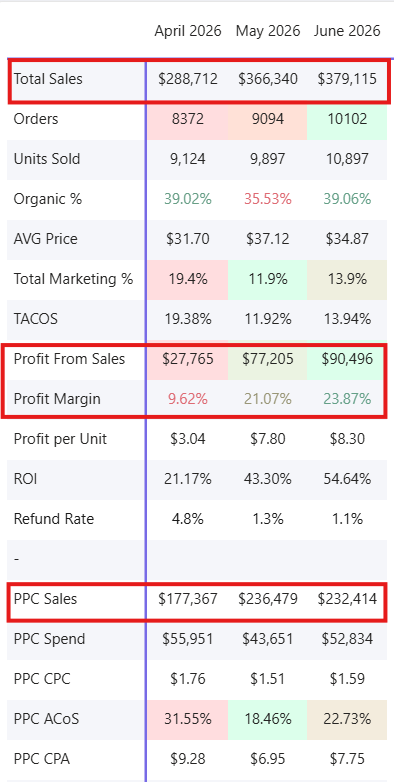
The source report shows sales, efficiency, and profit improving together.
This is the original account screenshot used to verify the case study. It can be opened at full resolution.
What to notice in the report
The improvement was visible across the whole account, not only inside PPC sales. Total sales, profit from sales, profit margin, units, and ROI all finished June above April, while TACoS and PPC ACoS were lower.
- Total sales:$288,712 to $379,115
- Reported profit from sales:$27,765 to $90,496
- Profit margin: 9.62% to 23.87%
- TACoS: 19.38% to 13.94%
- PPC ACoS: 31.55% to 22.73%
- Units sold: 9,124 to 10,897
Why the result matters
The account generated more sales and profit with less PPC spend than the starting month.
By June, monthly total sales were approximately $90,403 higher than April, while monthly PPC spend was approximately $3,117 lower. PPC sales still increased 31.0%, and reported profit from sales increased 225.9%.
Organic sales also remained meaningful. The account reported a 39.06% organic share in June, representing approximately $148,082 in estimated organic sales.
Discuss your Amazon PPC account
Find the product, efficiency, and B2B opportunities your current structure is hiding.
Bring your catalog, ACoS, TACoS, sales trend, and profitability questions. We will start with the decisions that matter most.