
The Strategic Guide to Reducing Amazon ACOS: Balancing Efficiency and Scalable Growth
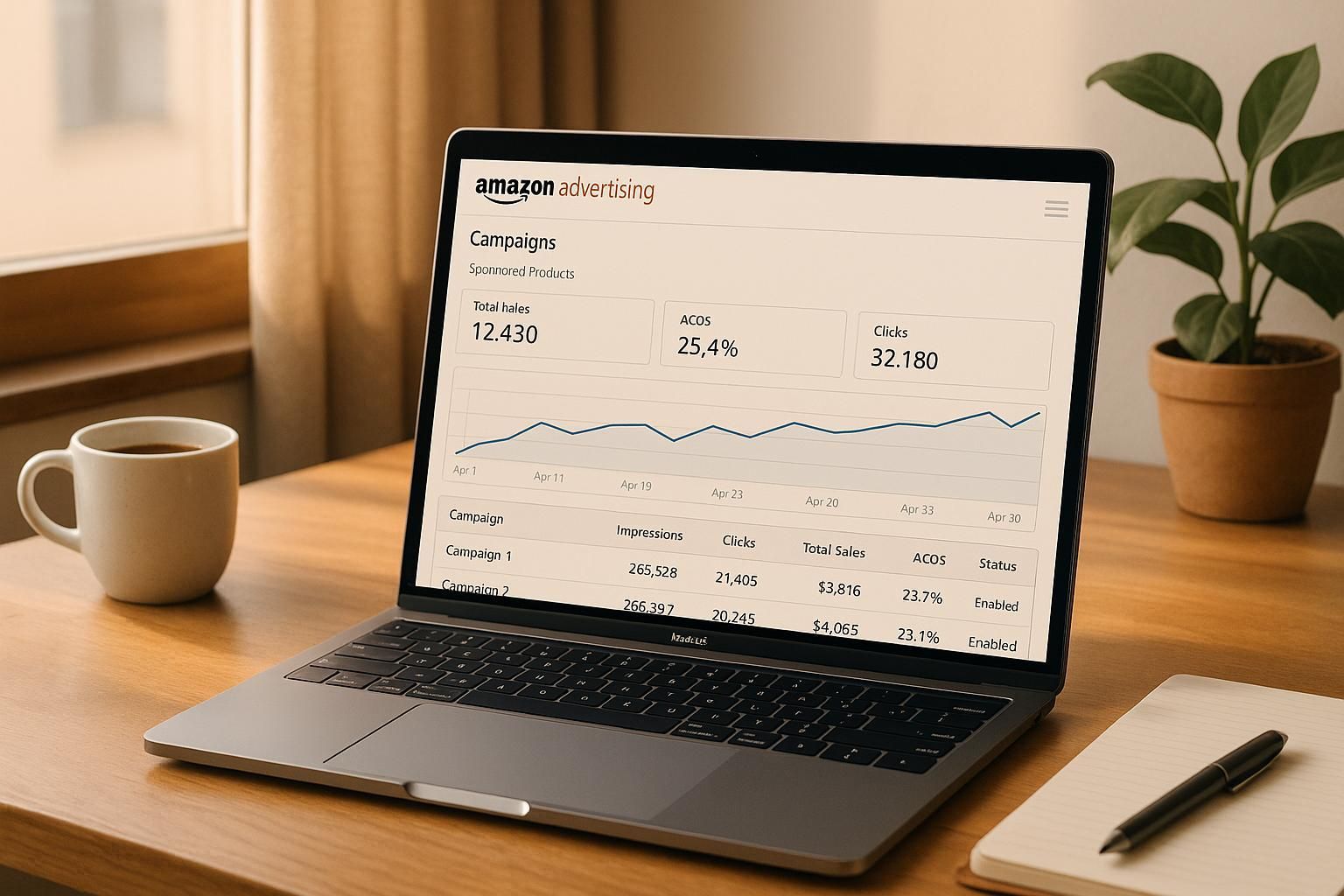
For high-volume Amazon sellers, Advertising Cost of Sale (ACOS) is often viewed as the definitive pulse of account health. However, many brand owners find themselves trapped in a reactive cycle: lowering bids to save on costs, only to see their organic ranking and total revenue decelerate.
Lowering ACOS is not a simple matter of cutting spend. It is an exercise in resource allocation. To achieve sustainable profitability, a brand must distinguish between "good" spend that fuels the flywheel and "wasteful" spend that erodes margins. As an Amazon PPC agency focused on the mid-market and enterprise levels, we see that the most successful strategies move beyond basic bid adjustments and toward a holistic view of the advertising ecosystem.
The ACOS Trap: Why Lower Isn't Always Better
Before diving into optimization tactics, it is critical to acknowledge the relationship between ACOS and growth. A very low ACOS often indicates that a brand is only bidding on "low-hanging fruit," such as branded terms or highly specific long-tail keywords. While this looks excellent on a spreadsheet, it often results in stagnant market share.
Conversely, a high ACOS might be acceptable during a product launch or a defensive play against a competitor. The goal of Amazon PPC management is to find the "Efficiency Frontier" where every dollar spent contributes to either immediate profit or long-term organic positioning.
Identifying and Eliminating Wasted Spend
The fastest way to improve ACOS without hurting sales is to eliminate "bleeders." These are keywords or targets that consume a significant portion of the budget but fail to convert.
Advanced Negative Keyword Harvesting
Most sellers are familiar with negative keywords, but few implement them with the necessary frequency or granularity. Systematic optimization requires looking at search term reports to identify:
- Irrelevant Queries: Terms that are semantically related but contextually wrong for the product.
- High-Click, Zero-Conversion Terms: Keywords that attract "window shoppers" but do not align with the product’s price point or value proposition.
- Low-Conversion Research Terms: Broad terms that may have high volume but consistently underperform compared to the account average.
When an Amazon advertising agency audits an account, the first priority is often "Search Term Isolation." This involves ensuring that high-performing terms are separated into their own environments where they can be bid on precisely, while poor-performing variants are aggressively negated elsewhere to prevent budget leakage.
Pruning Underperforming Targets
It is a common mistake to leave hundreds of active keywords in a single campaign. This dilutes the budget and prevents Amazon’s algorithm from focusing on the winners. By pausing targets that have reached a statistically significant number of clicks without a sale, sellers can immediately redirect that capital toward high-converting placements.
Service Context: Many 7-figure brands find that their internal teams lack the bandwidth for the daily, granular search term analysis required to stay efficient. IZC Media works with Amazon brands and aggregators to provide this structured, reliable ad performance, ensuring that no part of the advertising budget is wasted on non-converting traffic.
Conversion Rate Optimization: The Foundation of ACOS
ACOS is a mathematical derivative of two factors: Cost Per Click (CPC) and Conversion Rate (CVR). If your conversion rate improves, your ACOS naturally drops, even if CPCs remain static.
If a campaign is struggling with a 35% ACOS and the listing converts at 10%, doubling that conversion rate to 20% would cut the ACOS to 17.5%.
Closing the Gap Between Ad and Detail Page
To lower ACOS, the "promise" made in the ad must be fulfilled by the listing. Sellers should evaluate:
- Image Stack: Does the main image stand out in the search results to earn a high-quality click?
- Mobile Experience: Since the majority of Amazon shoppers are on mobile, is the A+ content and bullet point structure optimized for small screens?
- Price Elasticity: If ACOS is high across the board, it may be a pricing issue rather than a PPC issue. A slight price adjustment or a temporary coupon can often boost CVR enough to stabilize the ACOS of a best Amazon advertising agency strategy.
Structural Optimization of Sponsored Ads
The way campaigns are structured significantly impacts how effectively Amazon spends your money. A cluttered account with overlapping targets creates internal competition and makes it impossible to see which levers are actually driving performance.
Sponsored Products: The Efficiency Workhorse
Sponsored Products remain the core of most successful accounts. To lower ACOS here, consider "tiered bidding." High-intent, exact-match keywords should receive the highest bids and the bulk of the budget. Broad and phrase-match campaigns should be used sparingly for discovery, with lower bids to ensure they don't spiral out of control.
Sponsored Brands and Display: The Strategic Layers
Sponsored Brands often carry a higher ACOS because they target the top of the funnel. However, for established brands, these are vital for "New to Brand" (NTB) acquisition. To improve efficiency:
- Use Custom Images: Static lifestyle images in Sponsored Brand headers consistently outperform standard product grids.
- Refine Sponsored Display Targeting: Focus Sponsored Display on "Views Remarketing" to capture users who have already visited your listing but haven't purchased. This usually results in a much lower ACOS than cold category targeting.
IZC Media
helps mid-market Amazon brands scale their operations through data-driven PPC strategies that leverage the full suite of Amazon’s advertising tools, ensuring that each ad type serves a specific, profitable purpose in the overall funnel.

The Role of Bidding Strategies and Placement Modifiers
Manual bidding is a powerful tool, but it must be used with precision. One of the most effective ways to lower ACOS is to utilize "Adjust Bids by Placement."
Top of Search vs. Rest of Search
Often, a keyword may have a high ACOS overall, but if you look at the placement data, the "Top of Search" placement might be converting at 30% while "Product Pages" are converting at 5%. Instead of lowering the bid for the entire keyword, you can lower the base bid and apply a percentage multiplier to the Top of Search. This ensures your budget is spent where the conversion probability is highest.
Dynamic Bidding: Up and Down vs. Down Only
For brands focused strictly on lowering ACOS, "Dynamic Bids - Down Only" is usually the safest bet. It allows Amazon to reduce your bid in real-time if a click is unlikely to convert. While "Up and Down" can be useful for aggressive scaling, it requires constant monitoring to prevent ACOS spikes.
Service Context: Managing hundreds of placement modifiers and dynamic bid settings across thousands of targets is a significant operational challenge. Brands facing these PPC inefficiencies often partner with IZC Media for strategic Amazon PPC audits and ongoing management to ensure bids are always aligned with current margin goals.
Shifting Focus: From ACOS to TACoS
While this guide focuses on lowering ACOS, high-level operators understand that Total Advertising Cost of Sale (TACoS) is the metric that actually dictates business health. TACoS measures total ad spend against total revenue (organic + ad sales).
A brand might see its ACOS rise from 20% to 25%, which seems negative. However, if that extra spend pushed the product into the top three organic spots for a high-volume keyword, and the TACoS dropped from 12% to 10% because organic sales exploded, the strategy is a resounding success.
An Amazon PPC management service that focuses solely on ACOS is doing the client a disservice. The goal is to use PPC as a lever to drive the highest possible total contribution margin. This involves protecting brand territory, aggressively pursuing profitable market share, and maintaining a predictable advertising system.
Scaling Profitably Without Margin Erosion
As a brand moves from 6 to 7 or 8 figures, the complexity of managing these variables increases exponentially. Scaling often leads to "efficiency decay" where each new dollar of ad spend returns less than the previous one.
To combat this, sellers must implement rigorous performance benchmarks:
- Dayparting: Reducing bids during hours when conversion rates are historically low (e.g., late night/early morning).
- Inventory-Aware Advertising: Automatically pausing or slowing spend on products with low stock levels to prevent wasting money on a listing that will soon lose its "Buy Box."
- Portfolio Management: Grouping products by margin so that high-margin items can afford a more aggressive ACOS, while low-margin "volume movers" are kept on a tighter leash.
With over a decade of experience, IZC Media supports Amazon sellers looking to stabilize ACOS and scale profitably by applying these advanced operational controls. This level of oversight ensures that growth does not come at the expense of the bottom line.
Conclusion: Moving Toward Proactive Management
Reducing ACOS on Amazon is not a one-time task; it is a continuous process of refinement. It requires a balance between aggressive waste elimination and strategic investment in growth. By focusing on search term isolation, listing conversion rates, and sophisticated placement bidding, sellers can regain control over their margins.
However, for many established brands, the sheer volume of data makes manual optimization a bottleneck for growth. Attempting to manage every bid and negative keyword in-house often leads to missed opportunities or costly oversights.
Brands facing these challenges often benefit from working with an experienced Amazon PPC agency. IZC Media supports Amazon brands through data-driven strategy and hands-on Amazon PPC management service designed to restore performance, control spending, and enable sustainable growth.

Founder & CEO, IZC Media
Yan Izrailov is the Founder and CEO of IZC Media, specializing in Amazon PPC strategy and account profitability.
Scale your Amazon brand
Partner with our proactive Amazon PPC team to review your account and plan your next steps.
HAVE A QUESTION?
Get in touch with us
Contact Us
We will get back to you as soon as possible.
Please try again later.
LET'S TALK AMAZON GROWTH
Book a free strategy call